
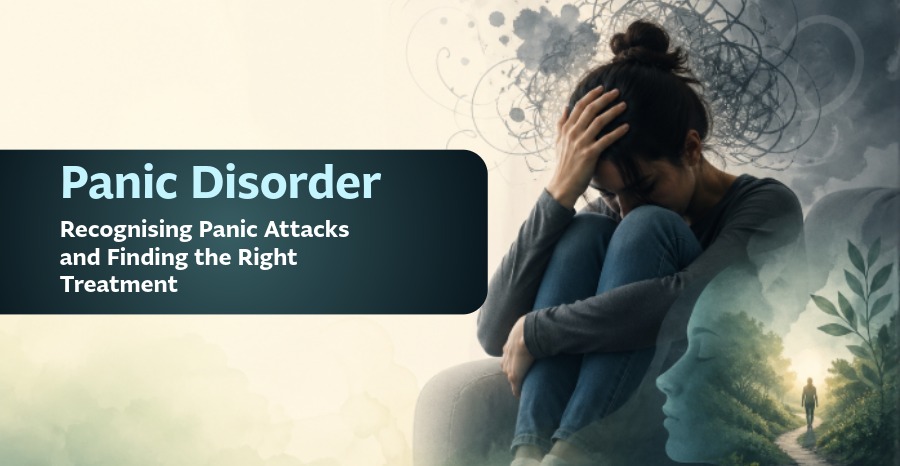
There are some experiences that are so intense, so sudden, and so physically overwhelming that they leave a person shaken long after the moment has passed. A panic attack is often one of them.
Many people describe it in similar ways: “It felt like I was going to die.” “I thought I was having a heart attack.” “I could not breathe.” “I felt I would faint right there.” In India, it is very common for people experiencing their first panic attack to rush to the emergency room, call family members in distress, or consult a physician or cardiologist because the symptoms feel so severe and real. And to be clear, they are real. Panic attacks are not imaginary. They are not “drama,” not attention-seeking, and not a sign of weakness.
When these attacks begin happening repeatedly, and the fear of having another attack starts affecting daily life, the condition may be panic disorder. This can be confusing and frightening, especially in a setting where mental health symptoms are still often misunderstood or dismissed. Some people are told to “just relax.” Others are advised to pray more, stay busy, or stop overthinking. While well-meaning support can help, panic disorder usually needs a more informed and structured approach.
The encouraging part is that panic disorder is highly treatable. With the right combination of understanding, support, and professional care, people can recover and return to a fuller, more confident life.
What Is Panic Disorder?
Panic disorder is an anxiety-related condition in which a person has repeated panic attacks and then develops ongoing worry about when the next one might happen. Over time, that fear can become just as distressing as the attacks themselves.
A panic attack is a sudden episode of intense fear or extreme discomfort that comes on quickly and often peaks within minutes. Sometimes it happens in response to stress, but sometimes it appears without any clear trigger at all. A person may be sitting at home, travelling in the metro, waiting in a queue, driving, lying in bed, or attending a meeting when the symptoms suddenly begin.
The key issue in panic disorder is not only the attack itself, but what follows. The person may start fearing certain places, bodily sensations, or situations associated with previous attacks. They may avoid going out alone, travelling long distances, standing in crowded places, or even exercising because they fear their symptoms will return.
This is where panic disorder can quietly interfere with quality of life. A person may still look “normal” from the outside, but internally they may be constantly scanning for danger, worrying about embarrassment, collapse, or losing control.
What Does a Panic Attack Feel Like?
One reason panic disorder is so frightening is that it often feels like a serious physical emergency. Many people do not realise at first that anxiety can create such intense bodily symptoms.
A panic attack may involve:
- A rapid or pounding heartbeat
- Chest pain, pressure, or discomfort
- Shortness of breath or a choking sensation
- Sweating
- Trembling or shaking
- Dizziness or feeling faint
- Nausea or stomach uneasiness
- Tingling or numbness in the hands, feet, or face
- Feeling detached from oneself
- Feeling that the surroundings are unreal or strange
- Intense fear of dying, collapsing, or “going mad”
These symptoms can be so overwhelming that people often seek urgent medical care. In many Indian families, the first assumption is usually a heart problem, low blood pressure, weakness, gas, or some sudden medical crisis. That is understandable because panic attacks do not feel mild. They can be dramatic and terrifying.
At the same time, not every panic attack looks the same. Some people mainly experience chest tightness and breathlessness. Others feel dizziness, trembling, and a strong urge to escape. Some feel restless and agitated, while others go quiet with fear. The experience may differ from person to person, but the distress is very real in each case.
When Is It Panic Disorder Rather Than Just Stress?
Stress can cause anxiety symptoms, and many people may experience a panic attack once during a particularly difficult phase of life. That alone does not always mean panic disorder.
Panic disorder is more likely when:
- Panic attacks happen repeatedly
- The attacks come unexpectedly, not only in obvious stressful moments
- The person spends a lot of time worrying about future attacks
- Daily routines change because of fear of panic
- The person starts avoiding places, travel, social situations, or activities
For example, someone may have one panic attack in a crowded mall and then begin avoiding malls, cinema halls, weddings, temples, offices, or public transport. Another person may stop travelling alone because they worry they will not get help in time if symptoms start. Some people insist on keeping a family member with them whenever they go out. Others start checking their pulse repeatedly or become overly focused on their breathing.
In Indian settings, the family often notices these changes before the person can explain them clearly. A once-independent individual may suddenly avoid markets, refuse train or flight travel, hesitate to go to work, or repeatedly ask for reassurance about their health. These patterns are important and should not be brushed aside as mere nervousness.
Everyday Scenarios Many Indian Readers Will Recognise
Panic disorder often shows up in ordinary situations. This is why people can feel confused by it.
Suppose a man is travelling in a crowded Delhi Metro coach in the evening, which is rush hour. It is hot, cramped, and of course, noisy. Suddenly, he feels breathless. His heart starts racing. He becomes dizzy and feels trapped. Then, he pushes his way out at the next station, convinced something terrible is happening. After that day, even the thought of travelling by metro makes him anxious.
Now imagine this. A lady standing in a long queue at a bank or government office. The line is slow, the room is crowded, and she begins to feel shaky and lightheaded. Her chest tightens, and she worries she may faint in public. The fear is so intense that she leaves abruptly. From then on, she tries to avoid queues and busy public places.
Another common example is a college student who experiences panic late at night. He wakes up with a pounding heart, sweating, and a feeling that he cannot breathe properly. His family rushes him to a nearby hospital, where tests appear normal. Even after reassurance, he remains frightened and starts dreading bedtime.
Then there is the person driving on a flyover, stuck in traffic, who suddenly feels dizzy and unreal, as though they may lose control of the vehicle. After that, they avoid driving alone or taking longer routes.
These are not unusual stories. In psychiatry practices across India, such complaints are common. The problem is that many people spend months moving from one doctor to another before panic disorder is recognised.
Why Panic Attacks Happen
To understand panic disorder, it helps to understand the body’s alarm system.
Human beings are designed to react quickly to danger. When the brain senses a threat, it triggers a fight-or-flight response. This causes changes in the body, such as a faster heartbeat, quicker breathing, muscle tension, sweating, and heightened alertness. In a true emergency, this response can protect us.
In panic disorder, however, that alarm system becomes oversensitive or misfires. The body reacts as if there is immediate danger even when there is none. The result is a sudden surge of intense physical symptoms.
Then another layer gets added: fear of the symptoms themselves. A person notices their heart racing and thinks, “What if this is something serious?” That thought increases fear, which intensifies the bodily sensations, which then increases fear even more. Within minutes, the cycle can become overwhelming.
This is one reason psychoeducation is so important. When people understand that panic symptoms come from a false alarm in the nervous system, they often begin to feel less helpless. The sensations may still be unpleasant, but they become less mysterious.
Common Causes and Triggers
There are several reasons for panic disorder. It usually develops from a combination of biological, psychological, and life-related factors.
Common factors may include:
- A family history of anxiety or panic
- High levels of ongoing stress
- Major life changes such as marriage, separation, exam pressure, relocation, childbirth, or job loss
- Trauma or unresolved emotional distress
- Sleep deprivation
- Burnout
- A tendency to be highly sensitive to body sensations
There may also be triggers that bring on or worsen panic symptoms, such as:
- Excess tea or coffee
- Nicotine
- Lack of sleep
- Skipping meals
- Alcohol use or withdrawal
- Stimulant substances
- Crowded environments
- Heat and humidity
- Travel stress
- Physical sensations that resemble panic, such as breathlessness or a fast heartbeat
In India, lifestyle factors also play a role in triggering panic attacks. Long commutes, irregular eating habits, work stress, family responsibilities, academic pressure, and poor sleep can all strain the nervous system. Many people also consume large amounts of caffeine through tea, coffee, or energy drinks without realising its impact on anxiety.
It is equally important to remember that panic-like symptoms can overlap with physical health conditions. Thyroid problems, cardiac issues, respiratory illness, medication side effects, and some metabolic conditions may produce similar symptoms. A proper medical and psychiatric evaluation helps clarify the picture.
The Hidden Burden of Panic Disorder
Panic disorder affects much more than a few minutes of distress. Over time, it can reduce confidence, independence, and functioning. A person may begin avoiding weddings, malls, religious gatherings, lifts, highways, meetings, or public transport. Some become dependent on a “safe person” and feel unable to go anywhere alone. Others repeatedly seek medical reassurance but still remain unconvinced that they are okay.
There can also be shame. In many Indian households, emotional distress is still not always understood. A person may hear things like “You think too much,” “Be strong,” “It is all in your mind,” or “Just distract yourself.” While these responses are often not meant harshly, they can leave the person feeling even more isolated.
The individual may start doubting themselves, too. They may ask, “Why can’t I handle simple things anymore?” “Why am I scared when nothing is actually wrong?” “What if I embarrass myself in public?” These thoughts can wear a person down.
Panic disorder can also coexist with depression, health anxiety, agoraphobia, or other anxiety disorders. That is another reason early intervention matters.
What Helps During a Panic Attack?
During a panic attack, people usually try to fight the symptoms. They run away immediately or search for proof that they are safe. While it is okay to do that, this can sometimes intensify the panic cycle. The thing that actually helps more is learning how to respond to the situation calmly and steadily. Here are some useful steps a person can take during a panic attack.
- Remind yourself what is happening: “This is a panic attack. It feels intense, but it will pass.”
- Gently slow the breath, especially the exhalation
- Relax the shoulders, jaw, and hands
- Place both feet on the ground and notice your surroundings
- Use grounding, such as naming objects you can see or sounds you can hear
- Avoid telling yourself catastrophic things like “I will die” or “I will lose control”
- Stay with the wave rather than immediately fleeing if it is safe to do so
For some people, a simple coping statement can help: “My body is reacting to fear, not danger.” Another helpful line is: “I’ve felt this before, and it passed.”
These strategies may not stop the panic instantly, but they can reduce the secondary fear that makes the attack stronger.
Lifestyle Changes That Support Recovery
An important thing that you should know is that panic disorder does not improve only through willpower. But everyday habits can make a meaningful difference in managing the situation. Here are some good habits that can support the recovery from panic disorder.
- Getting regular sleep of at least 6 hours
- Eating meals on time
- Reducing excess caffeine (tea, coffee, energy drinks, etc.)
- Limiting or avoiding alcohol and nicotine
- Building some form of regular exercise into the week
- Learning breathing or relaxation techniques
- Reducing chronic stress where possible
- Creating routines that feel steady and predictable
These simple changes can help more in coping with panic attacks than people expect. Family support is also important. When family members know that panic disorder is a real problem, they can help without being too protective. It’s good to reassure someone, but it’s also important to slowly encourage them to be more independent.
Treatment Options
The best way to treat panic disorder is usually with therapy, medication, or a mix of both, depending on how bad it is and what the situation is.
Therapy
One of the best ways to treat panic disorder is with psychotherapy, especially cognitive behavioural therapy (CBT). CBT helps people understand how their thoughts, feelings, and fears affect their bodies and how they avoid things.
In therapy, patients can learn to:
- Identify the panic cycle
- Understand how catastrophic thinking fuels symptoms
- Reduce fear of bodily sensations
- Challenge avoidance behaviours
- Gradually face feared situations in a structured way
Work based on exposure is often very helpful. This means helping the patient slowly and safely deal with things or feelings they are afraid of. The brain learns over time that these things are uncomfortable but not dangerous.
Therapy may also include dealing with underlying stress, trauma, problems with relationships, or perfectionistic patterns that make anxiety worse for some patients.
Medication
Medication can be very helpful, especially if you have panic attacks often, they are very bad, they stop you from doing things, or they are followed by depression or a lot of anxiety about what will happen next.
The role of medication may include:
- Reducing the frequency and intensity of panic attacks
- Lowering baseline anxiety
- Helping the patient re-engage with work, travel, or daily activities
- Creating enough symptom relief for therapy to be more effective
Medication decisions should always be individualised. Patients should know about worries about side effects, addiction, or long-term use, so it’s important to explain things clearly and check in with them later. When prescribed carefully and watched closely, medication can be a helpful part of recovery instead of something to be afraid of.
Self-Help and Psychoeducation
Self-help works best as part of a broader treatment plan, especially for mild to moderate symptoms.
Helpful self-management tools include:
- Learning about panic disorder
- Monitoring triggers and patterns
- Practising breathing and grounding exercises
- Keeping a symptom diary
- Following structured routines
- Reading trusted mental health material
- Reaching out rather than suffering in silence
Psychoeducation can be deeply reassuring for both patients and families. When people understand that panic is a nervous system response and not a sign of a serious character flaw or personal failure, the shame often begins to lift.
When Should Someone Seek a Psychiatrist’s Help?
A person should seek the help of a psychiatrist if panic attacks are happening repeatedly. If fear of future attacks is taking over daily life or if avoidance is growing, consulting a good psychiatrist is non-negotiable.
People should also consult a doctor if they:
- are missing work, college, or social events because of anxiety
- are repeatedly visiting emergency services with normal reports
- feel their sleep is affected
- feel low, hopeless, or increasingly withdrawn
- are using alcohol or medication unsafely to cope
- feel their family life or functioning is suffering
Many people wait too long because they hope the problem will just go away. Others fear being judged or labelled. But early treatment gives better outcomes and less disruption in daily life.
A Hopeful Way Forward
It is understandable that living with panic disorder is frightening. Fortunately, panic disorder is treatable, and recovery is possible.
Finding the name for the condition they are experiencing can be the first step for some. For others, progress can begin when they learn to stop imagining the worst about their panic symptoms. For many, healing deepens when they receive proper treatment and no longer have to face the fear alone.
The recovery process is particularly challenging because it involves many factors. Setbacks, stress, and exposure to the fears they are trying to avoid are not signs that the treatment is ineffective. Just the opposite. This is a demonstration of the treatment approach to panic disorder symptoms. The nervous system requires time, safe exposure, and support to learn a new behaviour.
The most important message is this: the experience of panic disorder does not reflect a personal weakness; it is not something to be ashamed of. People can regain confidence, independence, and peace of mind with awareness, compassion, and timely psychiatric care.
As a psychiatrist with more than 25 years of experience, I have successfully managed several cases of panic disorder.

Dr. Shashi Kumar, MBBS, MD (Psychiatry), is a highly regarded psychiatrist in Delhi. With extensive education from esteemed institutions like Patna Medical College & Hospital and AIIMS, he has built a strong foundation in the field. Dr. Kumar’s expertise spans Adult Psychiatry, Depression, Anxiety, Old Age Problems, Epilepsy, Chronic Headaches, Psychosexual Disorders, and Addiction. He currently operates the Sri Ganesh Psychiatry Clinic in Shalimar Bagh and Rohini Sector 16, providing exceptional care to patients. Alongside his commitment to the Indian Spinal Injuries Centre, he also serves at Max Hospital in Shalimar Bagh. Dr. Kumar’s reputation as one of the best psychiatrists in Delhi stems from his deep knowledge, experience, and dedication to improving mental health.